
Know Where Every Skip Stands

Monitor your skips across customer sites, vehicles and depots using wireless sensors and GPS tracking. Gain better visibility of skip movements, improve collection control and identify assets that are sitting idle for too long.

Monitor. Track. Control.

Skip Management connects wireless skip sensors with vehicle tracking and a central dashboard, helping you understand where your skips are and how they are being used. When a tracked vehicle comes within range of a skip’s sensor, the system can record the detection alongside the vehicle’s location and time. This helps build a clearer picture of deliveries, collections and movements without relying entirely on manual updates.
 
  • Wireless skip detection — Identify monitored skips when equipped vehicles come within sensor range.

  • Location visibility — See where skips were detected and distinguish between depot, vehicle and customer-site activity.

  • Movement and service records — Build a history of recorded movements to support collection verification and operational checks.

  • Fleet dashboard — View vehicles, skips, locations and alerts in one place.

WHY SKIP MONITORING?

Know Where Every Skip Stands — And When It Needs to Move

Managing skips across multiple customer sites, vehicles and depots can quickly become difficult without accurate, up-to-date information. Skip Management uses wireless sensors and GPS tracking to improve visibility of skip locations and movements, helping you identify long-stay skips, verify recorded activity and plan collections more effectively. With a central dashboard bringing your skips and fleet together, you can reduce time spent chasing information, improve asset utilisation and keep operations running smoothly.

THE BENEFITS

Fewer Lost Skips. Better Fleet Utilisation.

Instead of relying on spreadsheets, phone calls and drivers’ recollections, bring skip and vehicle activity into one operational view. Understand which skips are deployed, where they were last detected, how long they may have been at a customer site and which assets could be available for their next job. With configurable alerts and reporting, your team can investigate exceptions sooner, plan collections more effectively and make better use of the skips already in your fleet.

Know Where Skips Were Detected
Use wireless sensor detections and vehicle location data to improve visibility across customer sites, depots and collection routes.

Record Collections and Deliveries
Build a time-stamped activity history to help verify recorded movements and investigate service queries.

Identify Long-Stay Skips
Configure alerts when a skip remains allocated to a customer or location beyond a specified period, helping your team follow up on overdue collections.

Improve Asset Utilisation
Identify skips that may be idle or underused and make better-informed decisions about redeployment and purchasing.

Connect Skip and Vehicle Activity
Relate sensor detections to tracked vehicles to help operations teams understand which vehicle was near a skip and when.

One View of Your Fleet
Bring skips, vehicles, locations and alerts together in a central dashboard for a clearer operational picture.

WHO IT'S FOR

Built for Skip Hire and Waste Operations

Skip Management is designed for businesses managing skips across multiple customers, sites and vehicles — where knowing what is deployed, what has moved and what needs collecting makes a real difference to daily operations.

  • Skip hire companies — Improve visibility of skips deployed at customer premises.

  • Construction and demolition operators — Keep track of containers moving between building sites and depots.

  • Waste management contractors — Support collection planning and service verification.

  • Multi-depot operations — Gain a consolidated view of assets distributed across different locations.

SEE IT IN ACTION

Bring Your Skip Fleet Into View
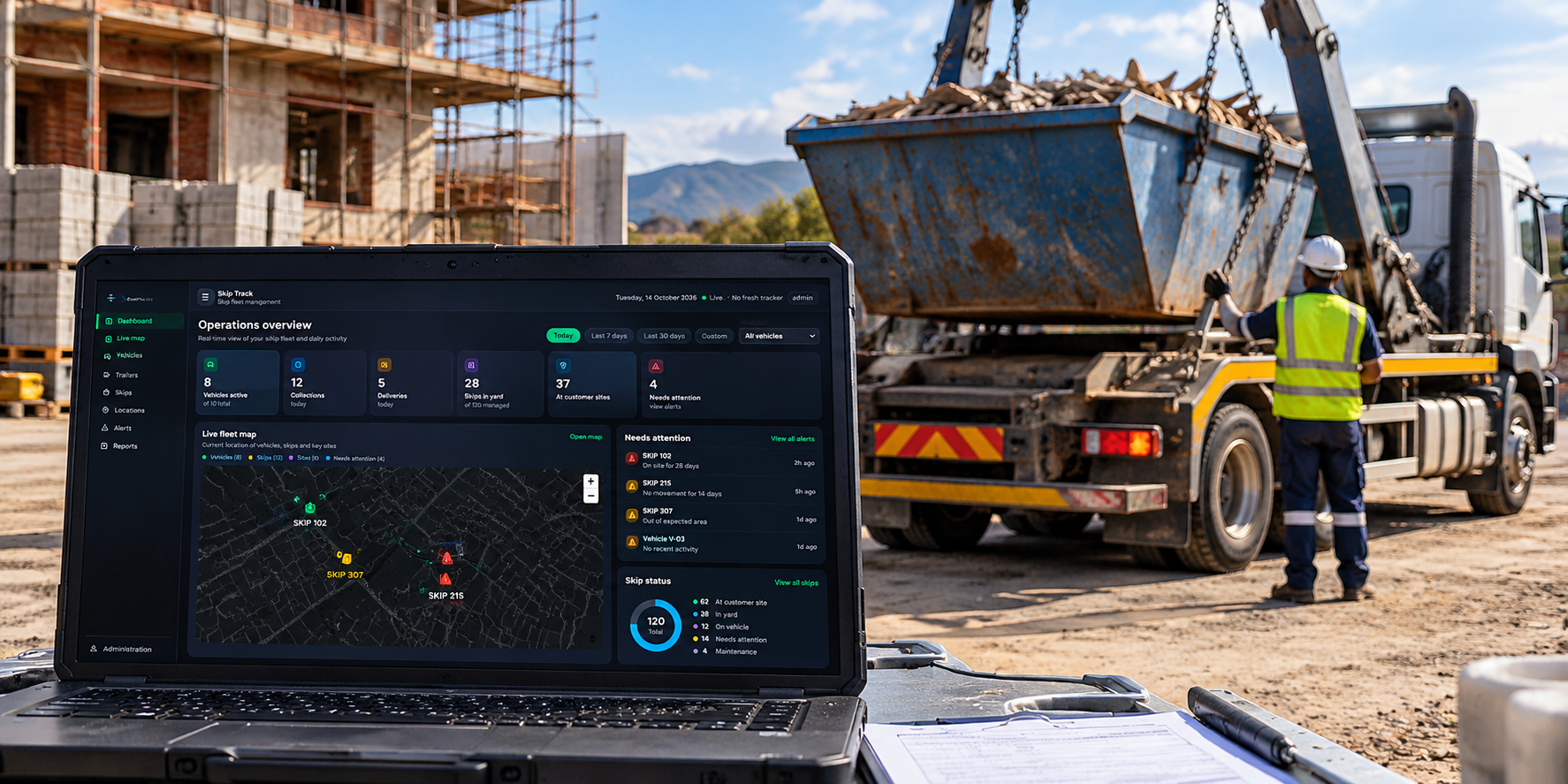
See how wireless skip detection and GPS tracking can help your team improve asset visibility, follow up on long-stay skips and make better use of your fleet.