The best technology depends on what needs to be tracked, how much data must be captured, and the environment in which it will be used. Some solutions are ideal for simple item identification, while others are better suited to automation, mobility, or long-range monitoring.
A practical summary is:
Barcode and 2D barcode for simple, low-cost identification.
NFC for tap-based customer and access experiences.
RFID for rapid bulk identification and line-of-sight-free scanning.
BLE for proximity and location-based tracking.
LoRaWAN for remote sensor data and long-range visibility.
Barcode technology remains one of the most widely used and cost-effective ways to identify products, assets, and documents. It uses printed lines or symbols that can be scanned quickly to retrieve information from a system. Barcodes work well in environments where items are scanned one at a time and where simplicity, speed, and low cost are important. They are commonly used in retail, warehousing, libraries, manufacturing, and general stock control. Typical barcode products include label printers, handheld scanners, mobile computers, barcode software, and durable printed labels.
2D barcodes, such as QR codes, offer a smarter way to store and share information. Unlike traditional barcodes, they can hold more data in a compact format and are easily read by cameras and scanners. This makes them ideal for product information, document management, ticketing, customer engagement, authentication, and digital links that connect the physical and online world. Common products include label printers, mobile devices, QR code scanners, and software platforms that generate and manage the codes.
NFC stands for Near Field Communication, a convenient tap-based technology that allows devices to exchange information when they are very close together. Its simplicity makes it especially useful for access control, tap-to-pay, equipment setup, customer engagement, and secure interactions where ease of use matters. NFC solutions typically include NFC tags, cards, readers, smartphones, and branded tap-enabled labels or tokens.
Diam non montes malesuada sagittis natoque iaculis feugiat. Lectus diam curae turpis mi ipsum fermentum leo si.
Diam non montes malesuada sagittis natoque iaculis feugiat. Lectus diam curae turpis mi ipsum fermentum leo si.
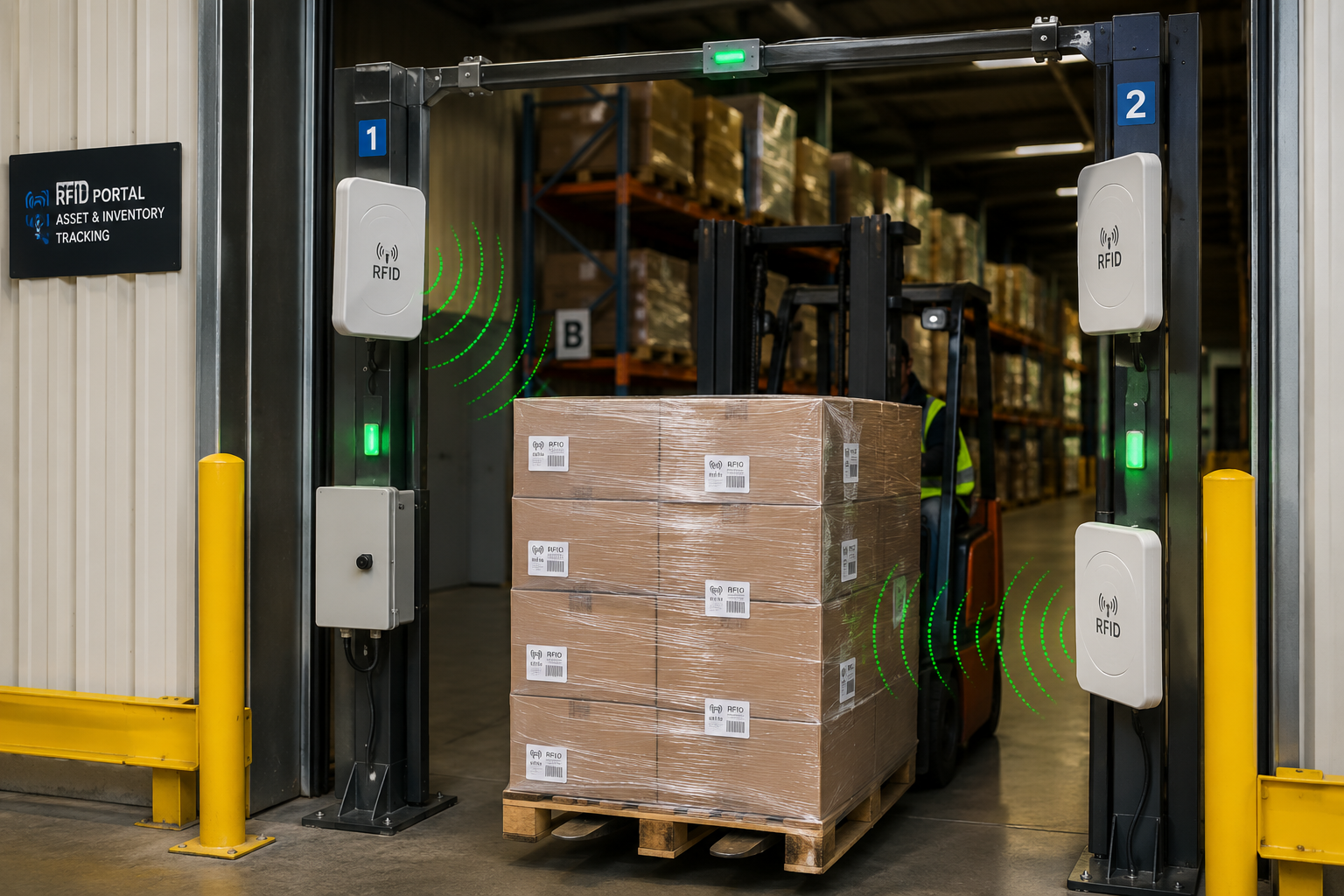
RFID stands for Radio Frequency Identification and is designed for fast, automatic identification without direct line of sight. It is particularly valuable when many items need to be scanned quickly, such as in warehouses, retail stockrooms, tool tracking, laundry operations, receiving areas, and asset registers. Associated RFID products include tags, hard tags, inlays, handheld readers, fixed readers, antennas, and RFID label printers.
BLE, or Bluetooth Low Energy, is a power-efficient wireless technology used for proximity sensing, location tracking, and short-range communication. It is a strong choice for indoor tracking, staff safety, asset visibility, and applications where devices need to broadcast or be detected nearby over time. BLE solutions often include beacons, wearable tags, gateways, mobile apps, and tracking platforms.
LoRaWAN is a long-range wireless network technology built for transmitting small amounts of data from remote devices while using very little power. It is especially well suited to monitoring applications such as utilities, agriculture, cold chain, environmental sensing, smart buildings, and remote assets spread across wide areas. LoRaWAN systems usually include sensors, gateways, network servers, dashboards, and battery-powered monitoring devices.
Together with our high-quality OEM hardware partners we enable the success of your solution.
At Digitise-it, we don’t believe in using technology for technology’s sake. Every solution we design starts with understanding your operational challenges, then selecting the right technologies to improve visibility, automate processes, and deliver measurable results..
We use globally adopted technologies including Barcode, RFID, BLE, LoRaWAN and IoT to deliver reliable, scalable solutions.
Every business is different. We combine technologies to suit your workflows rather than forcing your business to adapt to software.
Our solutions grow with your business, allowing you to start small and expand as your operational requirements evolve.
✔ Increased Visibility
✔ Improved Accuracy
✔ Real-time Information
✔ Better Decision Making